The company brain: what to ingest first
By Max Zwisler · Published April 30, 2026 · 2 min read

The first instinct when building a memory layer is to connect everything — the wiki, the drive, ten years of e-mail. That instinct produces a search index, not a brain. Agents drown in stale, contradictory documents exactly the way new employees do.
We ingest in a strict order. Four classes, smallest first.
1. Rules: how decisions get made
Brand guidelines, pricing rules, approval thresholds, tone constraints, things-we-never-do. Usually 10 to 30 documents. This class is small but it gates everything: an agent that doesn't know the discount ceiling cannot write a quote, no matter how much data it can search.
Rules must be versioned and have an owner. When the price list changes, the old one is superseded — not deleted, superseded, so the brain can answer "what was the price in March?"
2. Facts: what is true about the business
Products, prices, customers, team, tools, integrations. The structured stuff. Most of it already lives in systems with APIs — the brain stores pointers and snapshots, not copies. A fact entry that cannot name its source system is a rumor.
3. Decisions: what was chosen and why
The class everyone skips and the one with the highest leverage. "We dropped the Starter tier in January because support cost exceeded revenue" — one sentence, saves every future agent (and employee) from re-proposing the Starter tier. We log decisions as they happen, two fields: what was decided, why.
4. Patterns: what worked
Winning proposals, high-converting e-mails, the report format the CEO actually reads. Examples beat instructions. Five annotated examples of a good outreach e-mail outperform a page of tone guidelines.
What stays out
Raw chat history, meeting recordings, the full document graveyard. High volume, low signal, and a GDPR surface you do not want. If a chat thread contained a decision, extract the decision and let the thread go.
The test for whether the brain is working: a new agent — or a new hire — can answer "what do we charge, who approves exceptions, and why did we stop doing X?" in under a minute, with sources. That is the bar. Everything else is storage.
Frequently asked questions
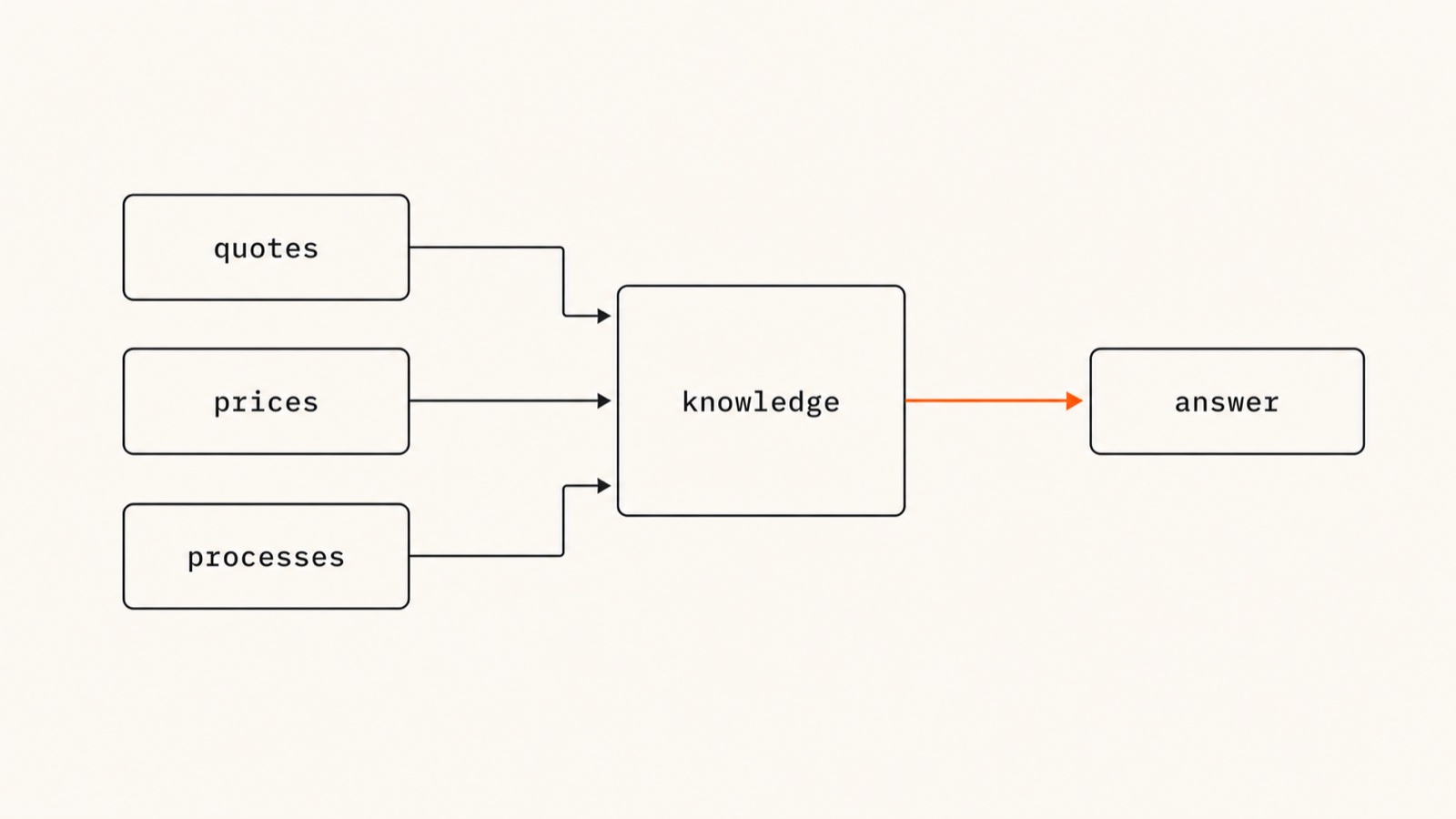
A versioned knowledge layer — rules, prices, processes, decisions — that every agent reads before it acts. Without it, the agent guesses what your company already knows.
The four document classes agents actually read — not the whole data lake. Start with what drives decisions and answers.
Operator Notes.
How we run a company on agents. One e-mail when we publish — no drip sequence, no sales follow-up.